SPECIALIST RESTORATIVE CAD
Crown & Bridge CAD Design
Routine restorative work still requires disciplined attention to the prescription. Pristine supports single crowns and multi-unit bridges with anatomy, contacts and manufacturing parameters aligned to the receiving laboratory.
Discuss this case typeWHO THIS SUPPORTS
A clear fit for your workflow.
Dental labs handling routine overflow and scanner-driven practices with an established manufacturing workflow.
Scope is confirmed for the specific indication, software and production route before acceptance.
Records to prepare
- Prepared and opposing arch scans plus bite
- Tooth numbers, restoration type and material
- Margin instructions and any relevant reference design
- Lab settings for contacts, occlusion, cement space and production
Use an agreed case-transfer route. The public inquiry form is for business details, not patient files.
ACTUAL DESIGN WORK
A view into the detail.
Representative work from the approved Pristine portfolio. CAD views show design work and do not establish clinical outcomes or the scope of a future case.
Explore the portfolio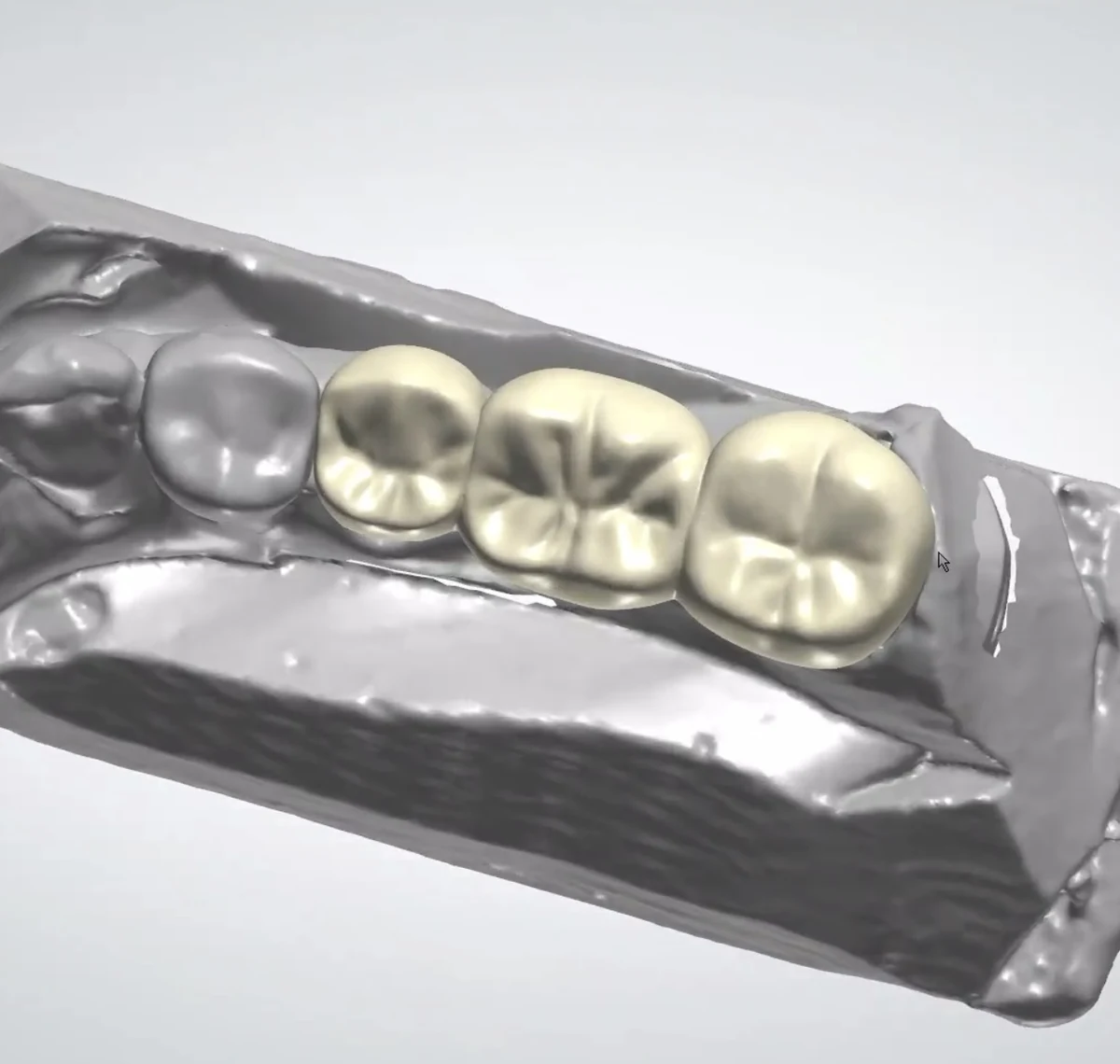
WORKFLOW & REVIEW
From the brief to the handoff.
Make the brief reproducible
Define the material and laboratory preferences before the first case. Avoid reusing settings from a different material or mill simply because the restoration looks similar.
Review boundaries and relationships
Check margin visibility, insertion path, contacts and the supplied bite. For bridges, review the prescribed pontic design, connector requirements and unit relationships. Unclear scan boundaries are raised for clarification rather than reconstructed as fact.
Handoff to your production route
Confirm whether the lab needs a manufacturing mesh, a native case or both. Review the first output in the receiving workflow and record accepted preferences for repeat cases.
COMMUNICATION & REVISIONS
A traceable handoff.
Agree repeat anatomy, contact and production preferences in a dated lab packet. Flag case-specific instructions separately from the defaults used for routine volume.
Keep a correction to the approved brief separate from a new scan or changed material request. Carry accepted recurring preferences into the next case rather than repeating the same revision note.
Scope, file formats, delivery target and revision terms are agreed before work starts. Your team retains clinical and manufacturing approval.
Build a lab-preference packetA DEFINED FIRST STEP
Discuss the work.
Define the handoff.
One paid test case, quoted to scope. Delivery target and revision terms agreed before work starts.
Request a test-case quote