QUALITY & STANDARDS
Review the details
that affect the next step.
Design review starts with the brief and ends with a clear handoff. The checks depend on the restoration, the supplied records, and your manufacturing requirements.
15+ YEARS IN DENTAL CAD/CAM
Experienced judgment.
Explicit parameters.
A design can look convincing and still miss a lab’s preferences. We align on anatomy, contact strength, occlusal settings, materials, and output requirements before evaluating the first case.
Questions about scan completeness, margins, component information, or conflicting instructions are raised for clarification.
THE REVIEW FRAMEWORK
- Input reviewPrescription, scan completeness, bite records, references, and agreed design scope.
- Restorative detailMargins, insertion direction, anatomy, proximal contacts, and occlusal relationships as applicable.
- Material & component checksSupplied thickness, connector, manufacturing, implant library, and component requirements for the case.
- Aesthetic reviewProportions, symmetry, line angles, incisal form, and reference alignment for aesthetic work.
- Handoff reviewAgreed file formats, review milestones, outstanding questions, and any limitations requiring your team’s attention.
EXPERIENCED REVIEW, BEFORE HANDOFF
What we catch
before delivery.
Design quality is also knowing what to question. Selected screenshots from our technical review library illustrate what we examine against the records, prescription, and each lab’s preferences.
Educational review views with original markings where shown. They are not before-and-after case studies or claims of a completed correction.
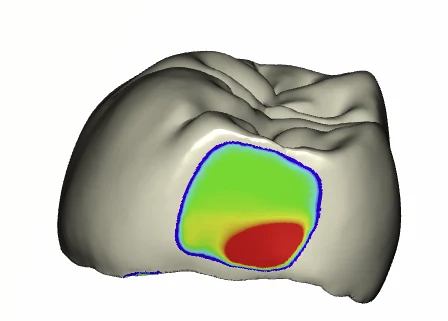
01Heavy contactProximal contact relationships
What we review
Review contact location and intensity against the agreed settings and adjacent anatomy.
Before handoff
Refine the contact where indicated and recheck the relationship within the supplied design records.
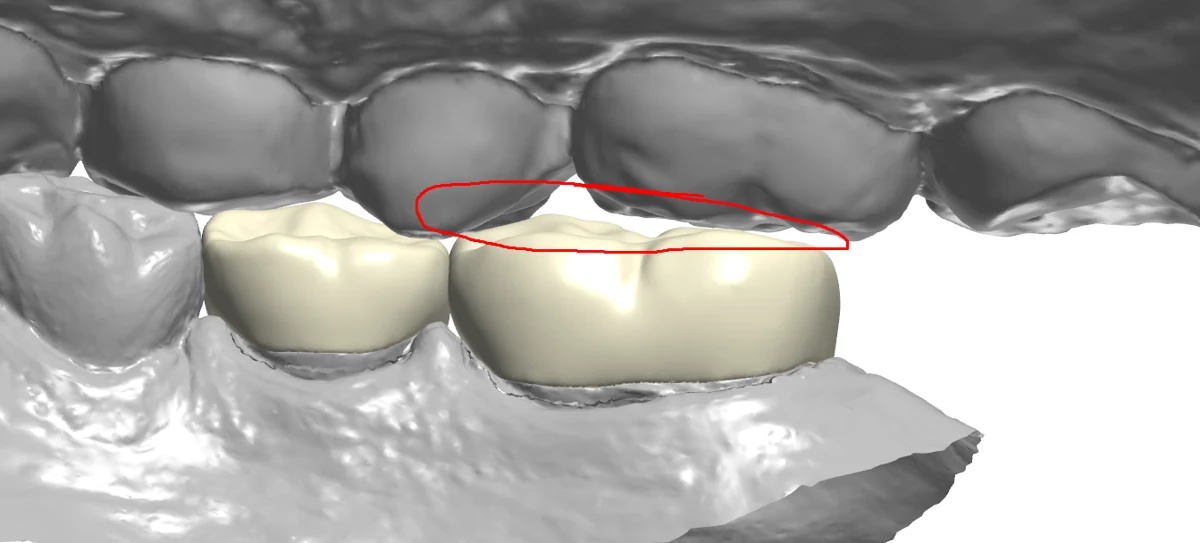
02Occlusal interferenceBite and occlusal relationships
What we review
Inspect the design against the supplied antagonist and bite records, using the agreed occlusal parameters.
Before handoff
Resolve design conflicts where the records support a change. Question uncertain bite information before making assumptions.
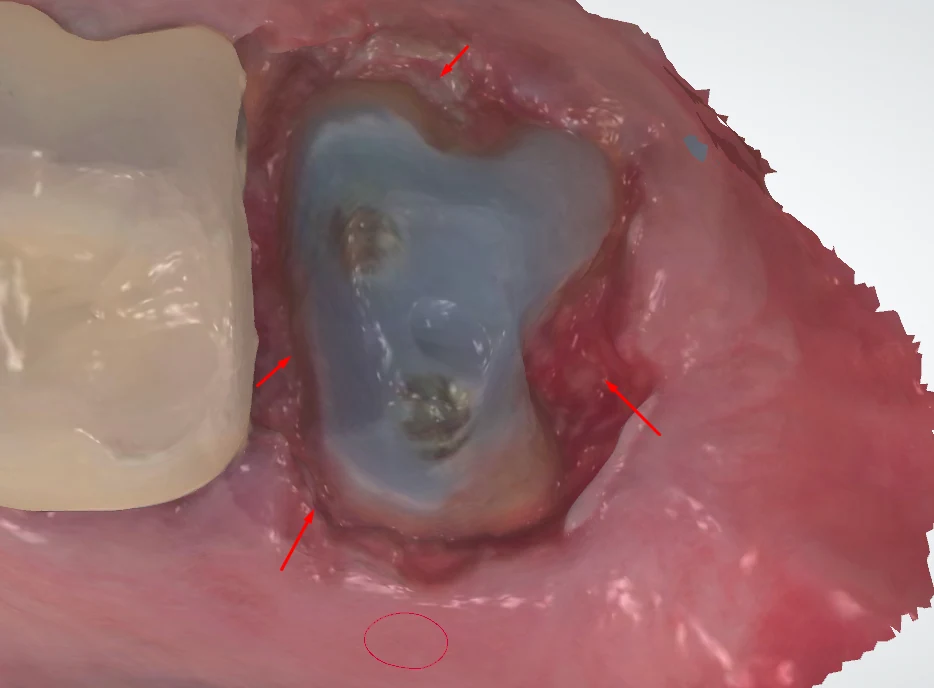
03Margin/tissue conflictMargin interpretation and scan clarity
What we review
Look for tissue or scan detail that obscures the margin or makes the intended boundary unclear.
Before handoff
Clarify the margin and request better records when needed. Do not treat an unclear scan as a confirmed design boundary.
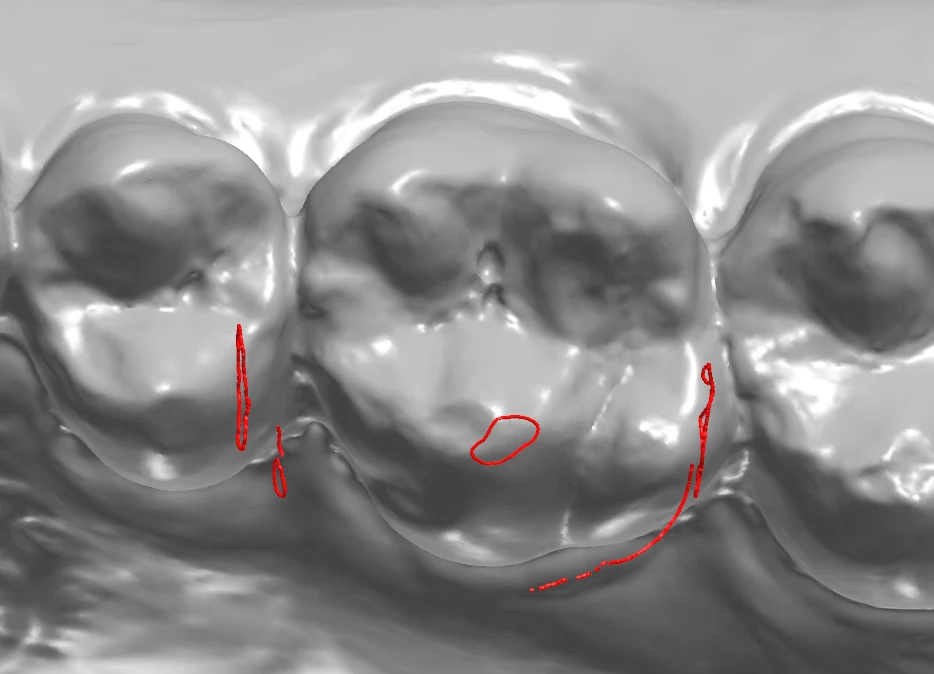
04Anatomy inconsistencyForm, proportion, and continuity
What we review
Compare anatomy, proportions, transitions, and neighboring forms with the prescription and the lab’s preferences.
Before handoff
Refine the design toward the agreed reference, then review how the changes relate to contacts and occlusion.
05Curve of Spee reviewArch-level occlusal continuity · Review focus only
Process description only. No approved case example is published for this review area.
What we review
Review the occlusal curve in the context of the supplied records, restorative plan, and agreed design scope.
Before handoff
Identify inconsistencies for review and make agreed design refinements. Changes to the restorative plan require clarification with the prescribing team.
Led by experience. Louie Rivera and Kristha Guanio bring design and QC leadership to the review process, with attention to production requirements and workflow consistency.
Review is case-specific. Unclear records and changes outside the agreed design scope are raised before handoff; your team retains final clinical and manufacturing approval.
Refinements need
a clear reference.
Review the first design against the agreed brief and send consolidated feedback. We use that review to refine the case and align preferences for future work.
Revision terms are defined in the quote. A changed prescription, new records, or expanded scope may require a revised quote. Your team provides final clinical and manufacturing approval.
Start with a paid test case